Haig Yazdjian - Es Kisher
Haig Yazdjian - Fazen
Haig Yazdjian - Fog el-nakhel
Thursday, 10 September 2009


Thursday, 16 July 2009
Theo Angelopoulos

Theo Angelopoulos was born in Athens in 1935. After studying law, he attended courses at (the French school of cinema) "L'IDHEC" and then grew close to Jean Rouch. Back in Greece, he was hired as film critic for the daily Allagi, which was closed down by the military junta. He began working on Forminx Story, a feature-length film about a pop group in 1965 but the film was never finished. This was followed by Broadcast (Ekpompbi) a short he made in 1968.
In 1970 he completed his first feature Reconstruction (Anaparastassi). "Out of the story"s thriller-type plot," writes Jean-Loup Passek, "- an immigrant returning from Germany is murdered by his wife and her lover - emerges an ideological style and approach which sets the film quite apart from the conformism of Greek cinema of the same period. The crime itself is far less interesting for the filmmaker than the ins and outs, as well as the individual and collective implications, of the inquiry." The film won an award at the Festival d’Hyeres and got noticed in Berlin, calling the attention of critics the world over to Theo Angelopoulos.
His next three films make up a trilogy on the history of contemporary Greece. Days of '36 (Meres tou '36) takes place just prior to the election during which General Metaxas imposed his dictatorship. The film is about the sequestration of a reactionary Member of Parliament. The government hesitates several times, but the hostage-taker is finally killed and this murder foretells the greater repression to follow.
The Traveling Players (O Thiassos, 1975), received the International Critics' Award at the Quinzaine des realisateurs, at the Cannes Film Festival. Largely considered a masterpiece of modern cinema, the action centers around a troupe of actors touring Greece from 1939 to 1952. Functioning on the principle of "collective memory", the film deliberately ignores chronological principles, traveling at will through the recent and dramatic past, including the Metaxas dictatorship, the Nazi occupation, the Greek resistance and its various tendencies, the victory of the monarchy, the civil war, the defeat of the communists in 1949, and the 1952 elections.
The members of the troupe relate to each other on several levels - as characters in the popular story they are attempting to perform; through the psychology of their characters; and on an historical level, concerning their relationship to Greece and its evolution. They bear the illustrious names of the Atridae. "For the first time in the short history of Greek cinema," explains Tassos Goudelis, "a film makes a truly ambitious attempt to dramatize the ordeals of contemporary Greece. Allusions to the Atridae give the viewer direction, inviting him to take stock of Greece’s recent history – both political and social - in the light of a more global destiny, the roots of which reach back to ancient times. The tragic dimensions of the characters are explored in the conflict which pits them against reigning political power."
With this four-hour fresco, and then with The Hunters (I Kynighi, 1977), which begins with the discovery of the body of a resistance soldier by six hunters (introducing the story of Greek political history from 1949 to 1977) some of the thematic and stylistic constants of Angelopoulos' cinema were established - the weight of history, a clinical examination of power, a Brechtian theatricality, wherein the individual has no importance with respect to the group, a rejection of conventional narration in favor of an intentionally broken one, in which stationary cameras and sequence-length shots create an alternative sense of time.
Power is once again at issue in Megalexandros (1980), the story of a turn-of-the-century highway robber who attempts to reign as tyrant. Born of common folk, he is ultimately destroyed by the common folk. After making a short documentary in 1982, Athens, Return to the Acropolis, Angelopoulos collaborated for the first time with screenwriter and poet Tonino Guerra on Voyage to Cythera (Taxidi sta Kithira, 1984), which won the Cannes Festival's International Critics’ Award for best screenplay. We follow the path of a filmmaker who wants to make a film about his own father and who returns to the Soviet Union after thirty years in exile, a stranger in his native land. Through this story of a society in which all spirituality appears to have been banished, Angelopoulos expresses more generally his own disillusionment with democratic Greece. A quest for identity, quite clearly marked by Antonioni, replaces the study of the group. The voyage, usually a coming home and signaled by the crossing of a border, becomes a basic tenet of the filmmaker's writing.
The Beekeeper (O Melissokomos, 1986), the last trip of an old man who has left his family, then Landscape in the Mist (Topio stin Omichli, 1988), the voyage of two children searching for an imaginary father, pursues this examination of a world without spirit and direction. In the latter, which won the Silver Lion at the Venice Mostra, Theo Angelopoulos quotes explicitly from The Traveling Players through the character of Orestes, who meets the film's two heroes. His next film is The Suspended Step of the Stork (To meteoro vima tou pelargou, 1991). Set on the borderline between two imaginary countries, in the heart of a village overflowing with refugees, a journalist believes he has recognized a politician who had mysteriously disappeared. With this film, Theo Angelopoulos begins his bitter reflection on the loss of reference points in the world since the fall of the Berlin Wall.
In 1994, he began shooting Ulysses' Gaze (To vlema tou Odyssea), throughout the Balkans. Writing about the film, which starred Harvey Keitel, Andrew Horton says, "«Ulysses' Gaze is a triple odyssey. On one level it is a search for the roots of Balkan cinema and, really, of cinema itself. It is also a voyage through the history of the Balkans, leading up to and including the ongoing tragedy of Bosnia. Finally, it represents a man's individual journey through his life, his loves and his losses.» Ulysses' Gaze won the Grand Jury Prize and the International Critics' Prize at Cannes and was named "European Film of the Year" by the critics.
With his next film Eternity and a Day (Mia eoniotita kai mia mera) Angelopoulos finally won the coveted Palm D'Or in Cannes and represented Greece at the American Film Academy Awards. Michael Wilmington called Eternity and a Day "a visually spellbinding study of an aging writer's journey through the present and past.» while in VARIETY David Stratton wrote, "«Eternity and a Day finds Angelopoulos refining his themes and style. Just as the other great filmmakers have in the past explored similar themes time and again, so Angelopoulos has evolved and come up with one of his most lucid and emotional journeys thus far.
Thursday, 9 July 2009
Osmanlı’dan Cumhuriyete Musiki Mirası Uşşak Faslı

Instruments: Ney: Salih Bilgin, Quanun: Taner Sayacıoğlu, Tanbur: Murat Aydemir, Classical Kemenche: Derya Türkan, Circle: Vahit Anadolu
Art Director: Mustafa Doğan Dikmen
Year: 1999
Production: Kalan Müzik (http://www.kalan.com/)
Tracks: 16 tracks
1- Baş taksim: Salih Bilgin (ney)
2- Darbeyn usulünde peşrev / Sultan I. Mahmud
3- Hafif usulünde kar (Maragalı Abdülkadir’e atfedilen eserlendir)
4- Darb-ı fetih beste / Hamamizade İsmail Dede
5- Nim devir beste / Tulum Abdi
6- Ağır aksak semai usulünde ağır semai / Halifezade Tahir Efendi
7- Ağır aksak semai şarkı / Dede Efendi
8- Aksak şarkı / Hacı Arif Bey
9- Aksak şarkı / Şevki Bey
10- Kanun taksimi: Taner Sayacıoğlu
11- Aksak şarkı / Lem’i Atlı
12- Curcuna şarkı / Enderuni Kadıköylü Ali Bey
13- Aksak şarkı / Dellalzade İsmail Efendi
14- Tanbur taksimi: Murat Aydemir
15- Nakış yürük semai / Tab’i Mustafa Efendi
16- Neva makamında son peşrev ve son yürük semai (Bestecisi bilinmiyor)
Fasıl Nedir?
“Fasıl”, din dışı Osmanlı musıkisinde kullanılan bir terimdir. Aynı makamdan değişik musıki şekillerinde bestelenmiş sözlü eserler ile saz eserlerinin birbirlerine bağlı olarak seslendirildiği konser düzenine fasıl denir. Aynı terim, bir bestecinin aynı makamdaki bir peşrev, iki beste, iki semai, bir de saz semaisinden oluşan eserleri için de kullanılır. Sadece iki beste ile semaiden oluşan sözlü eserler dizisine “takım” denir. Bu yapının batı musıkisindeki “süit”le gösterdiği benzerlik dolayısıyla, batılı kaynaklarda fasıl “birleşik bir süit” olarak nitelendirilmiştir.
The Ottoman Fasıl Music
The Arabic word fasıl literally means “division” or “section”. It denoted a section of a collection of lyrics or notations arranged according to makams, or performance of secular compositions in one makam. Songs composed in the same makam but in different compositional genres constitute a fasıl program in concert. The classical Ottoman fasıl in its most matured structure included the following compositions: taksim (instrumental improvisation), peşrev (instrumental, prelude), kâr ( vocal composition having a rather free structure), murabba beste (vocal composition whose song-text is based on four lines), ağır semai (vocal form in 10/8), şarkıs (light vocal pieces in various rhythmic patterns), yürük semai (vocal form in 6/8, performed in faster tempo), saz semaisi (an instrumental piece in 10/8, a postlude). Excluding the şarkı, this sequence was probably established in the second half of the eighteenth century. The şarkıs began to be included in the fasıl concerts at the beginning of the nineteenth century. (For the whole article: http://www.kalan.com/scripts/Dergi/Dergi.asp?t=3&yid=9486 )
More info about CD:
http://www.kalan.com/english/scripts/album/dispalbum.asp?id=464
Samples
Baş taksim
Nim devir beste
Ağır aksak semai şarkı
Curcuna şarkı
http://www.4shared.com/file/116953945/8a69faa5/ussak_fasli.html
Tuesday, 7 July 2009
Muammer KETENCOĞLU-Karanfilin Moruna

Title: Karanfilin Moruna
Artist: Muammer Ketencoğlu
Label: Kalan Music (209)
Year: 2001
Tracks: 12
"I am not going to tell you here about the early 20th Century rebellions by the Efes and Zeybeks of Turkey's Aegean region, nor about their customs or heroism which gave headaches to the Sultan, instead, l will share with you what working on this album has evoked in me -- an album evolved from the song collections of the Zeybeks, to whom we owe the prototypes, which later grew in subject matter and number."
Muammer KETENCOGLU
Gitar: Cengiz Onural
Akordeon: Muammer Ketencoğlu
Keman: Baki Kemancı
Ney: Aziz Şenol Filiz
Bendir: Aziz Şenol Filiz
Tanbur: Murat Aydemir
Davul: Yıldıray Kılkışlar
Darbuka: Suat Berkay
Bağlama: Mehmet Erenler
Cura: Cengiz Onural
Kontrbas: Nezih Yeşilnil
Zurna: Necmettin Ündev
Zurna: Mehmet Ündev
Kemane: Ersin Baykal
Lavta: Murat Aydemir
Santur: İhsan Özer
1- Kuyu Başında Bakır
2- Testi Doldurdum Çaydan
3- Beyaz Geyme Toz Olur
4- Yağcılar Zeybeği
5- Ah Öleyim Vah Öleyim
6- Kocaarap Zeybeği
7- Bir Gemim Var Adalara Yaslanır
8- Karanfilin Moruna
9- Karyolamın Demiri (Yandım Ayşem)
10- Manisa Zeybeği
11- Oduncular Dağdan Odun İndirir
12- Kadıoğlu Zeybeği
Theodora-Radi Dikici

Title: Theodora
Author: Radi Dikici
Publisher: Remzi Kitabevi
Language: Turkish
Year: 2009
Page: 367
ISBN: 9751413482
Bizans’ın gizemli imparatoriçesinin soluk kesici romanı…
Bizans imparatoriçesinin 48 yıllık yaşamını, günümüze ulaşan belgelerden de yararlanarak ele alan bu roman, işleniş ve kapsamıyla bir ilki temsil ediyor.
Dünya tarihinde kraliçe, çariçe, sultan ve benzeri unvanlarla hüküm sürmüş kadınlar arasında Theodora kadar güçlü bir imparatoriçe olmamıştır. O, hükmetme gücünü bizzat kendi yaratmış ve herkes ona biat etmiştir.
Tarih O'nu, bir taraftan cinsellik düşkünü –elbette gerçek payı vardır– bir kadın olarak tanıtırken, öte yandan çelik gibi bir iradeyle Bizans İmparatorluğu’nu önemli badirelerden kurtaran bir imparatoriçe olarak alkışlamıştır.
Theodora’yı bir yandan zaaflarıyla ve başarılarıyla izleyip hayranlık duyacak, öte yandan Bizans’ın o soluk kesici entrikalarını bir serüven filmi gibi izleyeceksiniz.
Wednesday, 1 July 2009
Haremde Neşe - Music from the Harem

Title: Haremde Neşe / Music from the Harem
Artists: Quanun: Safinaz Rizeli, Tanbur: Çiğdem Gürser, Classical Kemenche: Fatoş Aşçıoğlu, Blacksea Kemenche: Fatoş Aşçıoğlu, Vocals: Şehnaz Rizeli Uğurel-Ferahnaz Rizeli Gündoğdu-Gülnaz Rizeli, Musical Consultant: Reha Sağbaş, Director: Ahmet Kadri Rizeli
Year: 1996
Production: Kalan Müzik (http://www.kalan.com/)
Tracks: 22 Tracks
The Harem:Lexically the word connotes a sacred place where public entrance is absolutely forbidden. In specific usages of the word/ such as HAREM-İ ŞERİF the prophet's mausoleum in Medina is denoted, or in HAREM-İ HÜMAÛN women's guarters in the royal palace is referred to. In a general context it means a special space reserved for women within the social life of a tradional Turco-Islamic community. Though HAREM lost its inital mystery and enchantment with the passing of time, its currency is still retained at certain hocalities.Life in the HAREM varied according to time and place. Ordinary household practice was obviously differently than its counterpart in the palace. Like wise variations accordirg to difterend seasons/ months/ and days manifested an indead colorful atmosphere. (For the whole article: http://www.kalan.com/scripts/Dergi/Dergi.asp?t=3&yid=9506)
More info about CD:
http://www.kalan.com/english/scripts/album/dispalbum.asp?id=29
Tracks
Dök zülfünü meydane gel - Hisar Buselik Şarkı / Gülnaz Rizeli
Gönlüm hevesi zülf-i siyah kare düşürdüm - Hisar Buselik Yürük Semai / Koro
Dü çeşminden gitmez – Hisar Buselik Şarkı / Koro
Bir nev-civansın, şuh-i cihansın – Hisar Buselik Şarkı / Ferahnaz Rizeli Gündoğdu
Yandım denizden ağyar elinden – Hisar Buselik Şarkı / Koro
Karşılıklı taksim – Hüseyni
Senden bilirim yok bana bir faide ey gül – Hüseyni Şarkı / Şehnaz Rizeli Uğurel
Hicran oku sinemi deler – Hüseyni Şarkı / Gülnaz Rizeli
Potpori (Rumeli Türküleri) – Yalı kenarında zülfüm tararım, Aksadeler giyer boylu boyunca, İstanbul’dan Üsküdar’a yol gider
Çargah Sirto / M. Doğan Dikmen
On kere demedim mi sana (Rumeli Türküleri) – Evç Rumeli Türküsü
Kanun taksimi – Saba / Safinaz Rizeli
Gelmiş değil böyle peri – Saba Şarkı / Koro
Kemençe taksimi – Muhayyer / Fatoş Aşçıoğlu
Hal-i siyahı gerden-i nazik tenindedir – Muhayyer Ağır Semai / Koro
Bir elif çekti yine sineme canen bu gece – Muhayyer Yürük Semai / Koro
Sevdiceğim aşkını ağlatır – Muhayyer Şarkı / Şehnaz Rizeli Uğurel
Sevdiceğim cemalin çünki göremem – Hüseyni Şarkı / Ferahnaz Rizeli Gündoğdu, Koro
Karcığar Köçekçeler / Koro
Tanbur Taksimi – Hicaz / Çiğdem Gürser
Gidem dedim yarenlerim darıldı – Hicaz Rumeli Türküsü / Koro
Hicaz Mandıra
Samples:
Dök zülfünü meydane gel - Hisar Buselik Şarkı / Gülnaz Rizeli
On kere demedim mi sana (Rumeli Türküleri) – Evç Rumeli Türküsü
Kanun taksimi – Saba / Safinaz Rizeli
Gelmiş değil böyle peri – Saba Şarkı / Koro
Artists: Quanun: Safinaz Rizeli, Tanbur: Çiğdem Gürser, Classical Kemenche: Fatoş Aşçıoğlu, Blacksea Kemenche: Fatoş Aşçıoğlu, Vocals: Şehnaz Rizeli Uğurel-Ferahnaz Rizeli Gündoğdu-Gülnaz Rizeli, Musical Consultant: Reha Sağbaş, Director: Ahmet Kadri Rizeli
Year: 1996
Production: Kalan Müzik (http://www.kalan.com/)
Tracks: 22 Tracks
The Harem:Lexically the word connotes a sacred place where public entrance is absolutely forbidden. In specific usages of the word/ such as HAREM-İ ŞERİF the prophet's mausoleum in Medina is denoted, or in HAREM-İ HÜMAÛN women's guarters in the royal palace is referred to. In a general context it means a special space reserved for women within the social life of a tradional Turco-Islamic community. Though HAREM lost its inital mystery and enchantment with the passing of time, its currency is still retained at certain hocalities.Life in the HAREM varied according to time and place. Ordinary household practice was obviously differently than its counterpart in the palace. Like wise variations accordirg to difterend seasons/ months/ and days manifested an indead colorful atmosphere. (For the whole article: http://www.kalan.com/scripts/Dergi/Dergi.asp?t=3&yid=9506)
More info about CD:
http://www.kalan.com/english/scripts/album/dispalbum.asp?id=29
Tracks
Dök zülfünü meydane gel - Hisar Buselik Şarkı / Gülnaz Rizeli
Gönlüm hevesi zülf-i siyah kare düşürdüm - Hisar Buselik Yürük Semai / Koro
Dü çeşminden gitmez – Hisar Buselik Şarkı / Koro
Bir nev-civansın, şuh-i cihansın – Hisar Buselik Şarkı / Ferahnaz Rizeli Gündoğdu
Yandım denizden ağyar elinden – Hisar Buselik Şarkı / Koro
Karşılıklı taksim – Hüseyni
Senden bilirim yok bana bir faide ey gül – Hüseyni Şarkı / Şehnaz Rizeli Uğurel
Hicran oku sinemi deler – Hüseyni Şarkı / Gülnaz Rizeli
Potpori (Rumeli Türküleri) – Yalı kenarında zülfüm tararım, Aksadeler giyer boylu boyunca, İstanbul’dan Üsküdar’a yol gider
Çargah Sirto / M. Doğan Dikmen
On kere demedim mi sana (Rumeli Türküleri) – Evç Rumeli Türküsü
Kanun taksimi – Saba / Safinaz Rizeli
Gelmiş değil böyle peri – Saba Şarkı / Koro
Kemençe taksimi – Muhayyer / Fatoş Aşçıoğlu
Hal-i siyahı gerden-i nazik tenindedir – Muhayyer Ağır Semai / Koro
Bir elif çekti yine sineme canen bu gece – Muhayyer Yürük Semai / Koro
Sevdiceğim aşkını ağlatır – Muhayyer Şarkı / Şehnaz Rizeli Uğurel
Sevdiceğim cemalin çünki göremem – Hüseyni Şarkı / Ferahnaz Rizeli Gündoğdu, Koro
Karcığar Köçekçeler / Koro
Tanbur Taksimi – Hicaz / Çiğdem Gürser
Gidem dedim yarenlerim darıldı – Hicaz Rumeli Türküsü / Koro
Hicaz Mandıra
Samples:
Dök zülfünü meydane gel - Hisar Buselik Şarkı / Gülnaz Rizeli
On kere demedim mi sana (Rumeli Türküleri) – Evç Rumeli Türküsü
Kanun taksimi – Saba / Safinaz Rizeli
Gelmiş değil böyle peri – Saba Şarkı / Koro
http://www.4shared.com/file/115316251/ca678f15/haremde_nese.html
Tuesday, 23 June 2009
Zülfü Livaneli

Omer Zulfu Livaneli was born in Ilgin, Turkey in 1946. After being held under military detention for three months during the coup of March 12th, 1971, he had to leave Turkey and move to Sweden. After Stockholm, he lived in Paris and Athens, and he returned to Turkey in 1984.
Livaneli’s latest novel “Leyla’s House” was published in Turkey in May 2006. His third novel “Bliss”, published in 2002, also a number one best-seller, made 44 editions, became almost a cult work and is recently adapted to cinema in Turkey. In 2005, “Bliss” was published in Greece and Sweden, and in 2006, it was published in France by Gallimard, in the United States by St.Martin’s Press and in Italy by Gremese. Immediately after its publication in the latter, Bliss was awarded by Barnes & Noble, the biggest bookstore chain in the world, with the annually given “Discover Great New Authors” award due to its “superior literary value”. Bliss will soon be published in Norway by Gylendal and in Netherlands by Prometheus/ Bert Bakker. His second novel “One Cat One Man One Death”, his first novel “The Eunuch of Constantinople” and a collection of his stories titled “A Child in Purgatory” have also been published abroad.
Livaneli achieved prominent success not only as a writer but also as a musician. With his songs, which have reached cult proportions, he has had an impact on many generations of Turkish youth. His 1997 Ankara concert was attended by no less than 500 thousand people. Livaneli's songs have been recorded by well-known soloists in foreign countries. His collaborations with Mikis Theodorakis of Greece have been noted as a gesture of bringing together the two countries. He has been giving international concerts and the London Symphony Orchestra has recorded his songs. His music continues to have an impact on Turks and non-Turks alike.
Livaneli is perhaps one of the most outstanding figure in the cultural, artistic and political life of Turkey. He also has had a formative influence through his editorial and movies.
Besides being one of the foremost defenders of Turkish-Greek friendship, he has been a highly influential figure in Turkey's political life for the past 30 years.
Livaneli has been a UNESCO Goodwill Ambassador since 1996.
Sources: wikipedia.org
unesco.org
Music samples:
http://www.4shared.com/file/113493262/138331d/Zulfu_Livaneli.html
Tuesday, 16 June 2009
500 Years of Ottoman Cuisine-Marianna Yerasimos

Title: 500 Yıllık Osmanlı Mutfağı (500 Years of Ottoman Cuisine)
Author: Marianna Yerasimos
Publisher: Boyut
Year: 2005
ISBN: 9752301115
Language: Turkish
Pages:308
"Osmanlı Mutfağı... İstanbul'daki saray mutfağında ve saray çevresinde yaşayan, güzel yemeklerden hoşlanan bir seçkinler grubu tarafından 15. yüzyıldan itibaren biçimlendirilmiş bir yemek kültürü... Bu kültür, kullanılan malzemeden pişirme yöntemlerine, yemek çeşitlerinden yemek yeme alışkanlıklarına, yemek öğünlerine, sofradaki görgü kurallarına, mutfak binalarına dek pek çok konuyu kapsamakta. Bu kitapta Osmanlı yemek kültürünü oluşturan ögelere kısaca değiniyor, sonra da bu mutfaktan alınıp çağdaş mutfağa uyarlanan, denenmiş ve yapılabilir 99 yemek tarifi sunuyoruz. Osmanlıların beslenme alışkanlıklarını kavramak için bazen 7. yüzyılın Orta Asya'sına; bir yemeğin köklerini bulmak için 9. yüzyıla, Abbasi İmparatorluğu'nun başkenti Bağdat'a; pilavların sırrını çözmek için 13. yüzyıla, Moğol istilasına uğrayan Anadolu'ya, oradan da Safevi sarayına gidiyor; bu arada 15. yüzyılın çok öncesinden günümüze kadar, sadece zaman içinde değil, mekanlar içinde de yolculuk yapıyoruz. Bazen balık, balık yumurtası, havyar, lakerda ya da lalanga söz konusu olunca Bizans'a, hatta Roma İmparatorluğu'na dek uzanıyoruz."
Thursday, 11 June 2009
Manos Loizos - Gramma stin Agapimeni (Letter for the beloved - Nazim Hikmet)

Artist: Manos Loizos
Title: Gramma stin Agapimeni (Letter for the beloved)
Year: 1983
Production: MINOS - EMI
Description: Poems of Nazim Hikmet's "Letter for the beloved", rendition by Giannis Ritsos
Titles tracks:
1. Μονάκριβή Μου (6:30)
2. Για Τη Ζωή (4:53)
3. Το Δίχτυ (2:11)
4. Απερίγραπτη Λένε (4:30)
5. Στηθάγχη (4:04)
6. Κατά Τις Λάμψεις Πέρα (2:01)
7. Χλιαροί Και Παλλόμενοι (2:29)
8. Λίγα Γαρούφαλα (3:17)
9. Όπως Ο Κερέμ (4:25)
10. Τι Όμορφο Που 'ναι Να Σε Συλλογιέμαι (4:51)
11. Αν Με Τη Μεσολάβηση (4:13)
12. Η Πιο Όμορφη Θάλασσα (4:18)
13. Ένα Κρεβάτι Εκστρατείας (5:41)
14. Ο Άνεμος Κυλάει (2:12)
Wednesday, 10 June 2009
Itri (Buhurizade Mustafa Efendi)

His real name was Mustafa (1640-1712), and he was sometimes referred to as Buhurizade Mustafa Efendi . Itri was a major exponent of Turkish classical music, much in the same way that his contemporary J.S.Bach revolutionized Western music. He was a very prolific composer with more than a thousand works. However, only about forty of these survived to this day.
It is believed that he was a Mevlevi, and composed religious music for this order. He lived through the times of five Ottoman Emperors. He became well known during the time of Mehmet IV. He sang in fasıls, which are concert programs with the same makam, in the presence of Mehmet IV. Starting from this time, he enjoyed the support of the palace for many years. He taught music in the palace Enderun school. He was also interested in gardening. It is believed that his name Itri comes from the word itir, which means rose-geranium, or pelargonium.
As with most composers of his day, Itri was also a famous poet. He used poetic forms based on the classicial Ottoman school of poetry (Divan), as well as those based on syllabic meters identified with folk music and poetry. Unfortunately most of his poetry has not survived to this day. He was also known for being a calligrapher.
It is believed that he was a Mevlevi, and composed religious music for this order. He lived through the times of five Ottoman Emperors. He became well known during the time of Mehmet IV. He sang in fasıls, which are concert programs with the same makam, in the presence of Mehmet IV. Starting from this time, he enjoyed the support of the palace for many years. He taught music in the palace Enderun school. He was also interested in gardening. It is believed that his name Itri comes from the word itir, which means rose-geranium, or pelargonium.
As with most composers of his day, Itri was also a famous poet. He used poetic forms based on the classicial Ottoman school of poetry (Divan), as well as those based on syllabic meters identified with folk music and poetry. Unfortunately most of his poetry has not survived to this day. He was also known for being a calligrapher.
Major Works:
Tut-i Mucizei Guyem
Dilkeşhâveran Gece Salâtı , Mâye Cuma Salâtı
Segâh Mevlevi Ayini , Rast Darb-ı Türkî Naat ve Sofyan Tevşih
Nühüft Durak; Nühüft İlahî , Nühüft Tevşih; Nevâ Kâr
2 Pençgâh Beste , Hisar Devr-i Kebir Beste ve Aksak Semai
Mâhûr Ağır Aksak Semai , Rehavî Berefşan Beste
Buselik Hafif Beste ve Yürük Semai, Segâh Ağır Semai
Segâh Yürük Semai , Bayatî Çember Beste
Bestenigâr Darb-ı Fetih Beste , Dügâh Hafif Beste
Isfahan Zencir Beste ve Ağır Aksak Semai
Nikriz Muhammes Beste , Râhatu'l Ervah Zencir Beste
Irak Aksak Semai , Rast Aksak Semai
Nühüft Aksak Semai , Acemaşiran Yürük Semai
Rehavî Peşrev
Dilkeşhâveran Gece Salâtı , Mâye Cuma Salâtı
Segâh Mevlevi Ayini , Rast Darb-ı Türkî Naat ve Sofyan Tevşih
Nühüft Durak; Nühüft İlahî , Nühüft Tevşih; Nevâ Kâr
2 Pençgâh Beste , Hisar Devr-i Kebir Beste ve Aksak Semai
Mâhûr Ağır Aksak Semai , Rehavî Berefşan Beste
Buselik Hafif Beste ve Yürük Semai, Segâh Ağır Semai
Segâh Yürük Semai , Bayatî Çember Beste
Bestenigâr Darb-ı Fetih Beste , Dügâh Hafif Beste
Isfahan Zencir Beste ve Ağır Aksak Semai
Nikriz Muhammes Beste , Râhatu'l Ervah Zencir Beste
Irak Aksak Semai , Rast Aksak Semai
Nühüft Aksak Semai , Acemaşiran Yürük Semai
Rehavî Peşrev
Monday, 8 June 2009
16th International Istanbul Jazz Festival

16th International İstanbul Jazz Festival running July 2-15 will host world-famous artists and groups within its rich programme that includes a wide range of musical genres varying from classical and modern jazz to pop, rock, ethnic and folk music. Festival tickets available.
PROGRAMME:
FATİH ERKOÇ & KEREM GÖRSEV TRIO
SMV (Stanley Clarke, Marcus Miller ve Victor Wooten)
GEORGE BENSON - "Unforgettable Tribute to Nat 'King' Cole"
MELODY GARDOT
JOE JACKSON
MARACA'S OTRA VISION
ERKAN OĞUR-ALIM QASIMOV-DERYA TÜRKAN
BRAD MEHLDAU TRIO
PETER CINCOTTI
“New Folks” EMILIANA TORRINI
CENK ERDOĞAN TRIO AND TINEKE POSTMA
GENCO ARI TRIO & ADA ROVATTI
YILDIZ İBRAHİMOVA AND MIKE DEL FERRO
KAMİL ERDEM & RENÉ SOPA
NİLÜFER VERDİ TRIO AND ANDREAS BUCHMANN
AYŞE TÜTÜNCÜ ÜÇLÜSÜ VE MATHIAS EICK
MARC SİNAN
CAZ BOAT
BALKAN BOAT
CAZ CITY STREET CONCERTS
YOUNG CAZ
A.K.A. TRİO
FMY PROJECT – THE QUINTET
BAŞAK YAVUZ QUARTET
SMV (Stanley Clarke, Marcus Miller ve Victor Wooten)
GEORGE BENSON - "Unforgettable Tribute to Nat 'King' Cole"
MELODY GARDOT
JOE JACKSON
MARACA'S OTRA VISION
ERKAN OĞUR-ALIM QASIMOV-DERYA TÜRKAN
BRAD MEHLDAU TRIO
PETER CINCOTTI
“New Folks” EMILIANA TORRINI
CENK ERDOĞAN TRIO AND TINEKE POSTMA
GENCO ARI TRIO & ADA ROVATTI
YILDIZ İBRAHİMOVA AND MIKE DEL FERRO
KAMİL ERDEM & RENÉ SOPA
NİLÜFER VERDİ TRIO AND ANDREAS BUCHMANN
AYŞE TÜTÜNCÜ ÜÇLÜSÜ VE MATHIAS EICK
MARC SİNAN
CAZ BOAT
BALKAN BOAT
CAZ CITY STREET CONCERTS
YOUNG CAZ
A.K.A. TRİO
FMY PROJECT – THE QUINTET
BAŞAK YAVUZ QUARTET
http://www.iksv.org/caz/program.asp
JAZZ Magazine- Issue 54

Türk basın sektöründe 1995 yılının Ocak ayından beri varolan Jazz dergisi Türkiye'nin tek jazz dergisi olma gururunu 7 yıldır taşıyor. Türkiye'de müzik dinleyicilerinin % 5'inin dinlediği jazz müziğini meraklı kitlesiyle buluşturan ve Jazz'la ilgilenen her yaştan insanın giderek artan bir sempatiyle benimsediği Jazz dergisi, dünyadaki benzerleriyle de yarışıyor... Yurdumuzdaki ve dünyadaki Jazz müziği festival ve konserlerini izleyen, ünlü cazcılar ve müzisyenlerle röportajlara yer veren, yeni çıkan albümleri, müzisyenleri tanıtan yazı, fotoğraflar ve yorumlarla oldukça zengin içeriğiyle üç ayda bir yayınlanıyor.
Bu sayıda bulabilecekleriniz:
JAZZ'ARAZZI Zuhal Focan
MC NELLY SMITH Devrim Dikkaya-Dilek Himam Er
NO BORDERS: RICHIE BEIRACH Selim Benba
YAZARLARIMIZ; SERDAR KARABATI Devrim Dikkaya
ŞU JAZZ DEDİKLERİ, Ali Sönmez
FİRMALAR - SOUND'LAR: CRAMMED DISC Orhan Kahyaoğlu
RÖPS. MICHEL CAMILO Serhan Yedig
KEREM GÖRSEV Tunçel Gülsoy
OZAN MUSLUOĞLU Tunçel Gülsoy
TELVETEN Tunçel Gülsoy
JÜLİDE ÖZÇELİK Tunçel Gülsoy
KURT ROSENWINKEL Sevim Yolaçtı
TİMUÇİN ŞAHİN Sevim Yolaçtı
ANA VIDOVİC Nilgün Unur
ÖZEL DOSYA, BLUE NOTE 70 YAŞINDA Can Ergelmiş
NELER OLACAK: CHARLES LLOYD Can Ergelmiş
CHARLES LLOYD Feridun Ertaşkan
BABYLON Sarp Dakni
CRR Sümeyra Gümrah
NARDIS JAZZ CLUB Zuhal Focan
İSTANBUL JAZZ CENTER Zuhal Focan
GHETTO Aslı Delikara
SEVDA CENAP AND Zuhal Focan
Sunday, 7 June 2009
Sultan Composers

Title: Sultan Composers (2 CD) [Sultan Bestekarlar]
Artists: Violoncello:Uğur Işık, Ney:Ahmet Şahin, Quanun:Reha Sağbaş, Tanbur:Özer Özel, Classical Kemenche:Ahmet Kadri Rizeli, Rhytms:Fahrettin Yarkın
Year: 1999
Production: Kalan Music (130-131)
Description: The works in this collection are the recorded examples of an imperial family's musical heritage. These are professional level compositions of the Ottoman family members, who gave their signature to six centuries of the Turkish history. Composed between the first half of the sixteenth century and the second half of the present century, they have remained for many years in private collections known as "Sultani Besteler" (Sultanic Compositions). Now, for the first time, they have been brought together on these CD's.
Tracks: 47 tracks
1.Evc Saz Semai-Sultan Bayezid II (1447 - 1512)

2.Uzzal Peşrev-Sultan Murad IV (1612 - 1640)

3.Uşşak Peşrev-Sultan Mahmud I (1696-1754)

4.Pesendide Peşrev-Sultan Selim III (1761 - 1808)

5. Pesendide Saz Semai-Sultan Selim III
6.Hicaz Oyun Havası-Sultan Aziz (1830 - 1876)
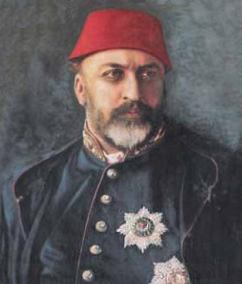
7. Hicaz Sirto-Sultan Aziz
more info about CD:
Ara GULER

Ara Guler, one of the most distinguished and internationally renowned of creative photographers, was born in Istanbul in 1928. While still at Lycee he took up various types of work in the film studios, while at the same time following theatre courses run by Muhsin Ertugrul with the ambition to be a stage director or a playwright. He began his journalistic career in 1950 on the Yeni Istanbul newspaper while still a student at the Faculty of Economics. On completing his military service he began work on the Hayat magazine, where he was employed until 1961 as head of the photographic department. When Time-Life opened an office in Turkey, Ara Guler was engaged as correspondent for the Near East. This was followed by his employment as Near East photographic reporter for Paris-Match and Der Stern. It was during this period that he made the acquaintance of Henri Cartier-Bresson and joined the Paris Magnum Agency. In 1961 he was selected by the English publication Photography Annual as one of the seven best photographers in the world, and in the same year he was accepted as the sole Turkish member of ASMP (American Society of Magazine Photographers). In 1962 he was awarded the title Master of Leica, an honour accorded to very few photographers, and in the same year, the Swiss periodical Camera, the most important publication in the world of photography, devoted a special issue to his work. In 1964 photographs by Ara Guler were included in a work by Mariana Noris printed in the USA entitled Young Turkey. In 1967 an anthology entitled Photography of the World containing photographs by Ara Guler and Richard Avedon was published in Japan. An album of photographs entitled Turkei was published in Germany in 1970. Some photographs on the subject of art and the history of art appeared in the literary sections of Newsweek, Time-Life and Horizon, and were used by the Swiss publishing house Skira. Ara Guler furnished the photographs for Lord Kinross’ Hagia Sophia, published in 1971. The cover photograph on the English, French and German versions of Picasso, Metamorphose et Unite, published by Skira to celebrate Picasso’s 90th birthday, was by Ara Guler. Works by Ara Guler were exhibited in Glimpses of the Human World in Canada in 1967, Ten Masters of Colour Photography in the New York Gallery of Modern art in 1968, and the Fotokina Fair in Koln in the same year. In 1972, an exhibition was opened in the Bibliotheque Nationale in Paris. In 1975 he was invited to the United States, where he took photographs of a number of famous Americans, and an exhibition entitled Creative Americans composed of photographs taken during this trip was opened in several large cities throughout the world. About the same time, Ara Gdler interviewed and took photographs of various famous personalities from Bertrand Russel to Winston Churchill, Arnold Toynbee to Picasso and Salvador Dali. The most famous of these photographic portraits was that of Picasso who was well known for his refusal to sit to photographers. In 1979 Ara Guler was awarded First Prize by the Association of Turkish Journalists for his work in the field of photographic journalism. In 1980 a number of his photographs were published in book form by the Karacan Press under the title Photographs. In 1986 he supplied the photographs illustrating the book Mimar Sinan written by Abdullah Kuran and published by the Hurriyet Foundation. The same book was published in English in 1987 by the Institute of Turkish Studies. In 1989 photographs of famous personalities in the world of the cinema were collected by Hil Publications under the title The Movie World of Ara Guler. In 1991 he supplied the photographs to illustrate the book The Sixth Continent written by Cevat Sakir Kabaagac (the Fisherman of Halicarnassus) for the Turkish Ministry of Foreign Affairs. Meanwhile, Ara Guler had travelled over most of the world apart from South America, and the photographs taken during these travels had been distributed throughout various countries by the Magnum Agency and printed in various newspapers and periodicals. From 1989 onwards he worked in Indonesia, Malaysia and Brunei with the most distinguished photographers in the world on the programme A Day in the Lfe of.. His photographs of the works of the architect Sinan, a subject on which he had worked for many years, were published in France in 1991 by Edition Arthaud, and in the U.K. and U.S.A by Thames and Hudson in a deluxe edition entitled Sinan, Architect of Soliman the Magnjicent. The same year saw the publication of a book published in the U.K. and U.S.A by Thames & Hudson under the title Living in Turkey, in Singapore by the Archipelago Press under the title Turkish Style, and in France by the Albin Michel Press with the title Demeures Ottomanes de Turquie. A large number of Ara Guler’s photographs are to be found in the Bibliotheque National in Paris, the George Eastman Museum in Rochester U.S.A., and the Nebraska University Sheldon Collection. His photographs are also exhibited in Das Imaginare Photo-Museum and the Ludwig Museum in Koln.
Friday, 5 June 2009
Murat Belge-Istanbul Travel Guide

Book Title: Istanbul Travel Guide
Turkish Title: Istanbul Gezi Rehberi
Author: Murat Belge
ISBN: 9789750504730
ISBN: 9789750504730
Language: Turkish
Year: 2007
Pages: 423
Year: 2007
Pages: 423
Publisher: İletişim Yayınları
Description: Prof.Dr.Murat Belge's Istanbul guide is about the old legends of the city, unknown historical places and stories from Byzantine and Ottoman period, ethimologic roots of the district names..
Description: Prof.Dr.Murat Belge's Istanbul guide is about the old legends of the city, unknown historical places and stories from Byzantine and Ottoman period, ethimologic roots of the district names..
Everyone who believe that Istanbul is the capital city of the world should read this book.
Subscribe to:
Posts (Atom)